
You Already Have a Personal Brand. The Question Is: Does it Build your Authority?
If your reputation influences how you win work, you already have a personal brand. Whether you’ve chosen to build it — or not.
Not in the influencer sense.
Not in the curated, content-heavy sense.
But in the way people perceive you, describe you, refer you, and decide whether to work with you.
The real question isn’t whether you have a personal brand. It’s whether it’s helping you stay relevant, or quietly making you easy to overlook.
The Misconception
One of the biggest misconceptions in professional services is that personal branding is something you build later.
Once you’re ready.
Once you have time.
Once you decide to “put yourself out there.”
Once you believe you’re senior enough to be taken seriously.
But that’s not how it works.
Your personal brand is forming whether you’re intentional about it or not.
The difference is:
Some people design it with strategy
Others inherit it
The Reality
Most professionals haven’t built a personal brand.
They’ve accumulated one — unintentionally, inconsistently, and without control.
It’s a mix of:
Past roles
Old positioning
Inconsistent messaging
What others say about them
Associations with their past firms or employers
And what shows up online when someone looks them up
And over time, that becomes the narrative.
Not necessarily the right one.
Just the visible one.
The Problem: Irrelevance
Here’s where this becomes a problem.
Because when your personal brand is built passively, it doesn’t evolve with you.
The bigger risk is that it reflects what you have done, rather than directing you intentionally towards your goals.
And that’s how professionals become irrelevant.
Not because they’re not good at what they do.
But because:
They’re known for what they used to do
Their expertise is misunderstood or outdated
Their online presence doesn’t reflect their current value
They’re attracting the wrong opportunities, or none at all
And in professional services, if you’re not clearly understood…
you’re not considered.
So the instinct is to post more.
Be more active.
Say more things.
But more visibility doesn’t fix misalignment.
It amplifies it.
The Risk
And this isn’t neutral.
Because when you don’t actively shape your brand:
Other people do it for you
Platforms like LinkedIn and Google do it for you
Your past does it for you
Which means:
Your positioning gets anchored in the past
Your pricing gets influenced by outdated perceptions
Your opportunities get filtered through the wrong lens
You don’t just stay the same.
You slowly become invisible to the opportunities you actually want.
The Reframe
Personal branding isn’t about becoming more visible.
It’s about taking back control of how you’re perceived before the market decides for you.
It’s about making sure that when people come across you — online or offline — they understand:
What you do now
Where you’re going
And why you’re the right person for the work
Without you having to explain it every time.
Because whether you’re shaping it or not…
Your personal brand is already working.
The question is:
Is it working for you —
or against you?
If you haven’t actively shaped your personal brand in the last 12 months… it’s already out of date.
Your career evolved.
Your language didn’t.
If your LinkedIn and professional narrative no longer reflect the level you’re operating at, you’re likely being overlooked for the opportunities you’re ready for.
At a certain point in your career, something subtle shifts.
The work you do becomes more strategic.
Your thinking deepens.
The direction you want to move in becomes clearer.
But the way you describe your work doesn’t keep pace.
Your LinkedIn feels slightly off.
You hesitate when updating your profile.
Posting feels uncomfortable — even though you have something to say.
Not because you lack expertise.
Because your positioning hasn’t caught up yet.
This is the gap most professionals don’t know how to close.
Is this you?
Uncertain strategy: You know personal branding matters, but it keeps falling to the bottom of the list
External visibility: You’re respected internally but barely visible externally
Digital presence: You’ve rewritten your LinkedIn profile countless times, or you ignore it completely
Content strategy: You default to resharing company content because you don’t know what to post
Competitive landscape: You see people with less experience building visibility faster than you
Standing out: You’re in the job market but you’re not landing interviews for jobs that you know you’re qualified for
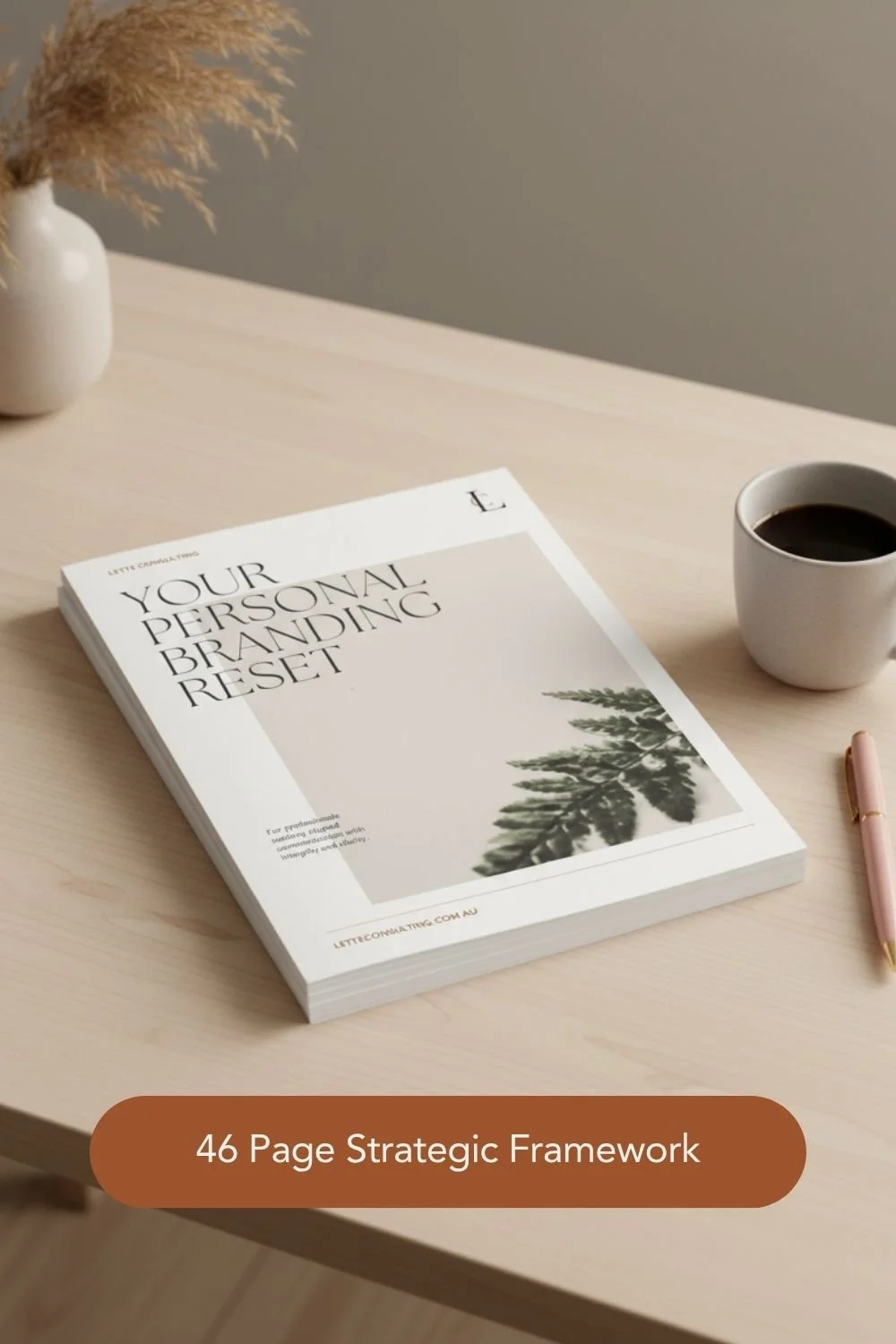
The Personal Branding Reset is a 46-page strategic framework designed to help you:
Reposition your expertise
Articulate your value clearly
Align your communication with where your career is going
Inside Your Personal Branding Reset:
Identity audit → clarify how you’re currently perceived
Articulation frameworks → translate expertise into positioning
Practical prompts → so you’re never staring at a blank page again
Your competence deserves better language.

For many professionals, LinkedIn starts as a digital version of their resume. Early in a career, that makes sense. But careers evolve.